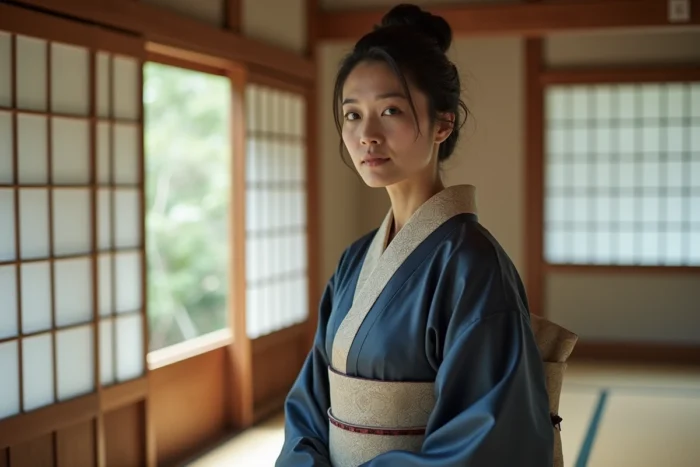
The term “kimono sleeve” refers to a textile construction where the sleeve and the body of the garment are cut from a single piece of fabric, without a classic armhole seam. In Japan, the length of these sleeves has never been decorative by chance: it encoded the social status, age, and marital situation of the person wearing the garment.
Kimono Sleeves and Dress Code: A Textile Grammar Born in the Nara Era
Before discussing length, it is essential to understand the piece that preceded the kimono as we know it. The kosode, literally “small sleeves,” served as an undergarment for the aristocracy during the Heian period. Its straight T-cut, without darts or body adjustments, already established the fundamental principle: the sleeve extends the torso without a break in the fabric.
The Yōro code, enacted in 718, mandated that garments be fastened from left to right. This technical detail solidified the construction of the kimono for the centuries that followed. The standardization of the cut allowed artisans to focus all differentiation on two elements: the fabric (silk, cotton, linen) and the dimensions of the sleeves.
Understanding the history of kimono sleeves requires grasping this direct link between dress regulation and social expression, a link that has strengthened with each historical period.
Furisode, Tomesode, Kosode: What Sleeve Length Means
The Japanese system distinguishes kimonos primarily by the size of their sleeves. This classification is not anecdotal: it determines the context in which the garment can be worn.
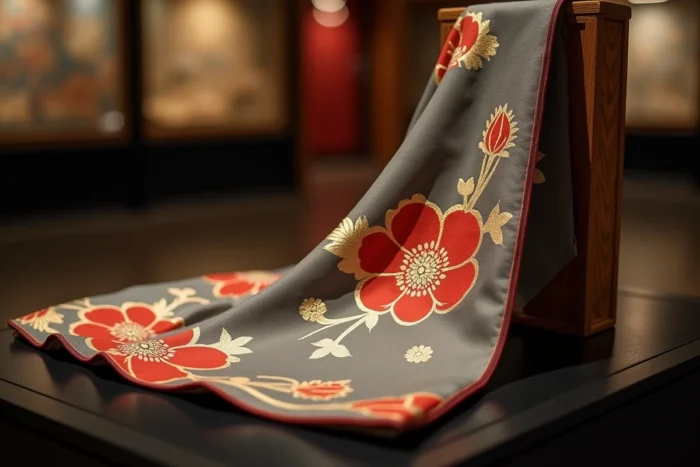
- The furisode (“swinging sleeves”) has the longest sleeves, sometimes reaching down to the ankles. Reserved for unmarried women, it signifies youth and availability for marriage.
- The tomesode features significantly shorter sleeves. Worn by married women, it marks the transition to another social status. The patterns are concentrated at the bottom of the garment.
- The kosode, a common ancestor, retained narrow and functional sleeves, suitable for daily work and the layered clothing of the Heian court.
The length of the furisode sleeves gradually increased between the Edo period and modern times. During the Edo era, long sleeves also served as a gestural language: a young woman could express her interest or refusal by the way she waved her sleeves during social encounters.
The sleeve not only dresses the arm, it communicates a coded message that those around her can read instantly.
The Furisode in Contemporary Japanese Ceremonial Industry
The furisode remains the most visible kimono in the Japanese public space today, but in a very specific context. The Coming of Age Ceremony (seijin shiki), celebrated every January for twenty-year-olds, is the main occasion when these long sleeves are worn.
Since the 2000s, a professional market for furisode rental and styling has developed around this event. Families rent the kimono, book a hairstyling session, and a photo shoot in specialized studios. The total cost represents a significant budget, and this event industry has transformed the furisode into a service product as much as a heritage garment.
Weddings constitute the second outlet. Future brides sometimes wear a furisode during their engagement before switching to the shiromuku (white ceremonial kimono) on the wedding day. This commercial logic surrounding long sleeves explains why the furisode has retained its spectacular dimensions while other types of kimono have evolved towards more sobriety.
Short Sleeves and Climate Adaptation: Jinbei and Modern Derivatives
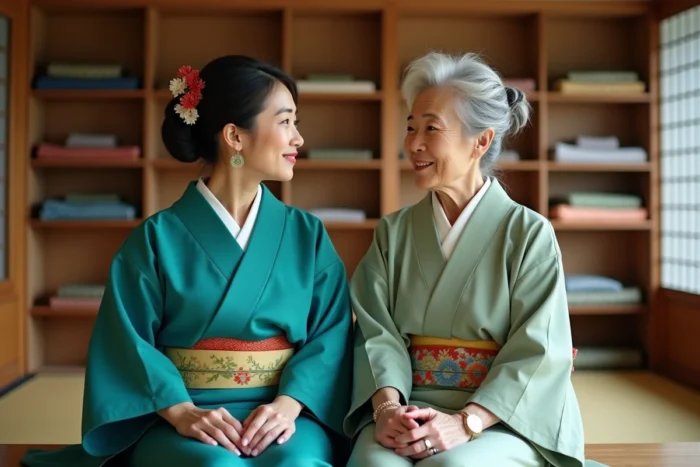
In contrast to the furisode, an opposite trend is observed in garments derived from the kimono. The jinbei, a lightweight set consisting of a jacket and short pants, has adopted much shorter tubular sleeves than those of the classic kimono.
This form became widespread from the 1960s, according to the brand MUJI, to address Japan’s hot and humid summers. The jinbei retains the overall silhouette of the traditional garment (straight cut, crossover at the front), but radically simplifies the sleeve for thermal comfort.
The same logic applies to haori jackets and “kimono jackets” circulating in contemporary fashion. Shortened sleeves allow for maintaining the visual vocabulary of the kimono without its practical constraints. This shortening is not a degradation: it reflects a continuous adaptation of the garment to its usage context.
Patterns, Silk, and Obi: The Elements Accompanying the Sleeve
The length of the sleeve never functions alone. It is part of a system where each component of the kimono reinforces the message conveyed by the others.
Seasonal patterns, painted or woven directly into the silk, change according to the season and occasion. A coming-of-age furisode will display vibrant floral patterns (chrysanthemums, cherry blossoms), while a wedding tomesode will feature cranes or pines, symbols of longevity.
The obi, the wide belt tied at the back, also varies in width and style of knot depending on the type of kimono. A furisode is worn with a wide obi tied elaborately, which visually emphasizes the volume of the sleeves. The relationship between obi width and sleeve length creates the characteristic silhouette of each category of kimono.
Colors also follow a strict code. Bright shades (red, orange, pink) are associated with youth and thus with long sleeves. Dark or subdued shades (black, gray, navy blue) correspond to the short sleeves of married women or men’s kimonos.
Thus, the length of kimono sleeves is not an aesthetic whim. It results from a clothing system where fabric, color, pattern, and cut work together to convey precise social information. The fact that the furisode survives today primarily through the ceremonial industry, while the jinbei establishes itself in daily life, shows that this system continues to evolve according to the actual uses of the garment.