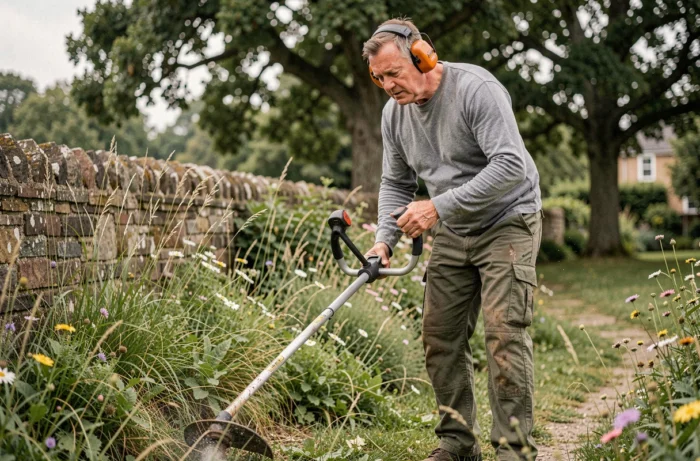
A freshly mowed lawn, neat edges, and then this embankment overrun with brambles that the mower can’t reach. The brush cutter intervenes where other tools stop: tall grasses, underbrush, sloped terrains, or inaccessible areas. Choosing the right machine requires understanding a few simple technical criteria, but also taking into account regulatory constraints that most buying guides overlook.
Fire regulations and motorization: a priority criterion
Before even comparing models, check if your municipality is subject to the legal obligation of clearing brush. This obligation applies in 52 French departments, or about 7,500 municipalities, mainly in areas exposed to forest fires. Property owners must then clear brush to a minimum depth of 50 meters around buildings, sometimes up to 100 meters.
It’s not just a matter of surface area. In several departments under forest fire vigilance, prefectural orders prohibit the use of thermal gardening equipment during certain time slots, particularly in the afternoon, and near forested areas. A thermal brush cutter can therefore become unusable for several weeks in summer if you live near a wood or scrubland.
The choice of motorization is no longer just a trade-off between power and comfort. It is also a matter of regulatory compatibility depending on your geographical area. If you are in a concerned department, a battery-powered brush cutter ensures you can work without time restrictions, even during orange or red vigilance periods. You will find models suited to these constraints on debroussailleuse-warrior.com, with detailed specifications by type of motorization.
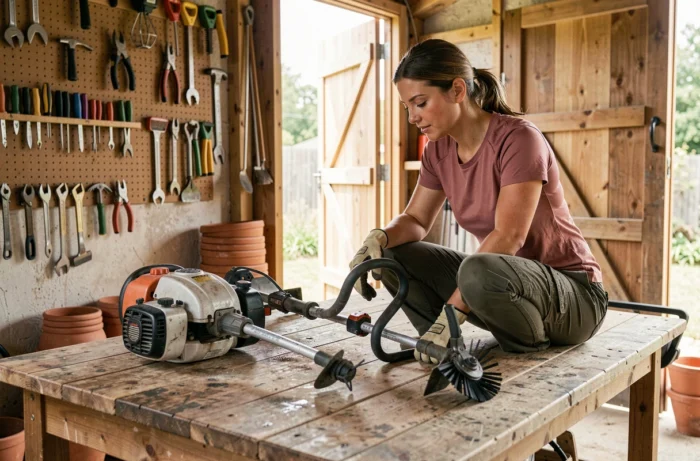
Thermal, battery, or corded electric brush cutter: which motor for which terrain
Do you have a flat plot of a few hundred square meters near the house? A corded electric brush cutter is more than sufficient. It remains the lightest, the cheapest, and requires no engine maintenance. Its limit is obvious: the cord. Beyond 20 to 30 meters from the outlet, the task becomes cumbersome.
The battery: increasing autonomy, decreasing weight
Battery-powered brush cutters have made significant progress. Recent models offer sufficient autonomy to maintain an average plot without intermediate recharging. Their main advantage: no cord, no fuel, very little noise. This is also a benefit for adhering to authorized gardening hours on weekends.
Their limit remains very dense vegetation. On thick brambles or land that has been fallow for several years, the battery may lack torque compared to a thermal engine.
The thermal: brute power for large areas
The thermal brush cutter remains the reference for large surfaces and tough vegetation. It runs without time limits as long as the tank is full. In return, it is heavier, noisier, and requires regular maintenance (spark plug, air filter, oil-gas mixture).
For a sloped terrain with brambles and shrubs, the thermal remains the most effective choice. For an urban garden with edge finishes, it is oversized.
Cutting system: nylon line, blade, or disc
The type of cutting head determines what your machine can actually cut. This is a point that many buyers overlook, even though it directly affects the result.
- The nylon line is suitable for soft grasses and edge finishes. It wears out quickly on hard vegetation but is unlikely to damage a wall or fence upon contact.
- The 3 or 4-tooth blade tackles tall grasses, nettles, and young woody shoots. It offers a good compromise between versatility and safety.
- The cutting disc (circular saw type) attacks thick brambles, small shrubs, and softwood. It requires more caution and complete protective equipment.
Why does this choice matter so much? Because a brush cutter sold with a simple nylon line will never be able to tackle an embankment overrun with brambles. Check that the chosen model accepts multiple types of cutting heads: this avoids having to buy a new machine when the vegetation changes.
Weight, harness, and ergonomics: what makes the difference over time
A brush cutter is often carried for an hour or more. The weight of the machine, the quality of the harness, and the overall balance determine whether you will finish the job without back pain.
Wired electric models generally weigh the least. Thermal models are the heaviest. Between the two, battery versions vary greatly depending on the capacity of the built-in battery.
- A double strap harness with a waist belt distributes the weight across the torso and hips. For long sessions, this is a minimum.
- The D-handle (single grip) is suitable for edges and small areas. The U-handle (bike type) offers better lateral control for large areas.
- On backpack brush cutters, the engine is worn on the back and connected to the cutting head by a flexible shaft. This format reduces arm fatigue, but it is reserved for intensive use.
Before buying, hold the machine in your hands if possible. A brush cutter that is too heavy for you will be left abandoned at the back of the garage. Power is useless if ergonomics prevent you from using it for more than twenty minutes.
Protective equipment: the minimum to be prepared
The cutting head of a brush cutter projects stones, wood splinters, and plant debris at high speed. Working without protection exposes you to eye injuries and cuts to the legs.
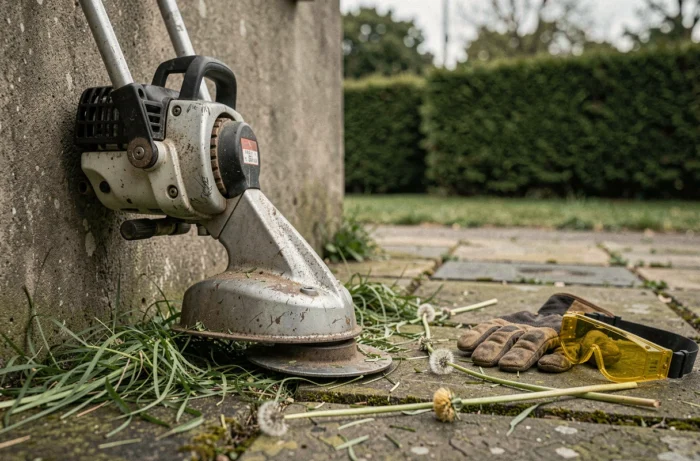
A face shield or safety glasses are essential. Cut-resistant leg guards or reinforced pants protect the lower body. Thick gloves improve grip and absorb vibrations. For thermal models, hearing protection (headphones or earplugs) completes the equipment.
These accessories represent a modest budget compared to the price of the machine. Ignoring them is taking a disproportionate risk compared to the savings made.