The promise of a lifetime guarantee has greatly contributed to Eastpak’s reputation among students, travelers, and busy urbanites. However, on the brand’s official website, the wording has evolved: it no longer speaks of a “lifetime” guarantee but rather a limited global warranty of up to 30 years depending on the products. The gap between marketing perception and actual coverage conditions deserves a factual examination.
What the Eastpak warranty covers (and does not cover) for bags
The official text from Eastpak specifies that only defects in materials or workmanship are covered. The brand reserves the right to repair or replace the product at its sole discretion. This wording significantly restricts the scope.
In practical terms, a bag with a seam that comes undone for no apparent reason or a zipper that breaks despite normal use can be the subject of a claim. However, a long list of exclusions reduces the scope of this promise.
| Situation | Covered by warranty | Excluded from warranty |
|---|---|---|
| Defective original seam | Yes (workmanship defect) | – |
| Malfunctioning zipper without impact | Yes (material defect) | – |
| Torn fabric after snagging | – | Accident |
| Fading due to sunlight | – | Normal wear / exposure |
| Strap torn due to overload | – | Misuse |
| Scratches, stains, dents | – | Aesthetic damage |
| Damage during air travel | – | Transport (airline) |
The key point to remember: the warranty protects against manufacturing defects, not against the everyday life of the bag. A product damaged by normal wear, an accident, or air transport falls outside the scope, even if it is only a few months old.

To better understand the nuances of this coverage and the experiences of buyers, the Eastpak lifetime warranty is the subject of a detailed analysis that usefully complements the reading of the official terms.
Eastpak limited warranty and legal warranty: two distinct logics
In France, every new product purchased comes with a legal conformity warranty. This warranty, governed by the consumer code, obliges the seller (not the manufacturer) to address a reported conformity defect within a defined period after purchase.
The Eastpak warranty is a commercial warranty, voluntarily granted by the brand. It is in addition to the legal warranty but does not replace it. The difference has practical consequences:
- The legal warranty binds the seller and covers conformity defects without the consumer having to prove a manufacturing defect.
- The Eastpak commercial warranty binds the brand and only covers manufacturing defects, at Eastpak’s exclusive discretion.
- In case of Eastpak’s refusal on a recent product, recourse to the seller via the legal warranty remains possible.
This distinction explains some of the frustrations visible on forums: buyers seek the Eastpak warranty for a problem that the brand classifies as “normal wear,” while the same defect could have been covered by the legal warranty with the retailer.
Proof of purchase and return procedure: friction points
The official Eastpak page conditions coverage on the presentation of proof of purchase. Receipt, invoice, or order confirmation: without proof of purchase, the claim is compromised.
For a bag purchased several years ago, finding this document is often a challenge. In-store purchases pose more problems than online orders, where the order history remains accessible.
The procedure also differs depending on the purchase channel. A bag purchased on the Eastpak website follows a specific return process (return label, confirmation number). A bag bought from a third-party retailer may require going through that retailer or contacting Eastpak directly, with varying timelines and requirements.
Second-hand purchases or without a receipt
The Eastpak warranty specifies that only the person who purchased the product or received it as a gift can benefit from it. Therefore, a bag bought second-hand on a resale platform does not have any commercial coverage, even if the model was manufactured recently.
Eastpak warranty: real durability or marketing argument for backpacks
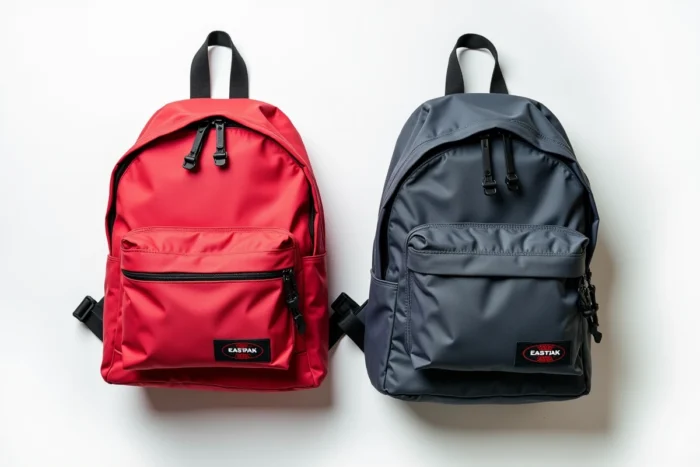
The longevity of Eastpak bags (notably the Padded Pak’r model) has received conflicting testimonials. Some users report years of intensive use without issues. Others report failures, particularly with zippers and strap seams, after just a few months.
Perceived quality heavily depends on the model and range. A classic backpack made of dense Cordura does not age the same way as a collaboration model made of thinner fabric. The warranty, however, remains the same in its exclusions regardless of the price paid.
The shift from the term “lifetime warranty” to “limited global warranty of 30 years” reflects a communication adjustment. The announced duration remains longer than that of most competitors in the urban and school bag segment. The actual scope, however, remains that of a standard manufacturing warranty, applied with a margin of interpretation that belongs to Eastpak.
The Eastpak bag remains a robust product in its price category. The warranty that accompanies it serves as a safety net against manufacturing defects, not a comprehensive insurance against the passage of time. Keeping the receipt and understanding the distinction between commercial warranty and legal warranty remains the best protection for an informed buyer.